
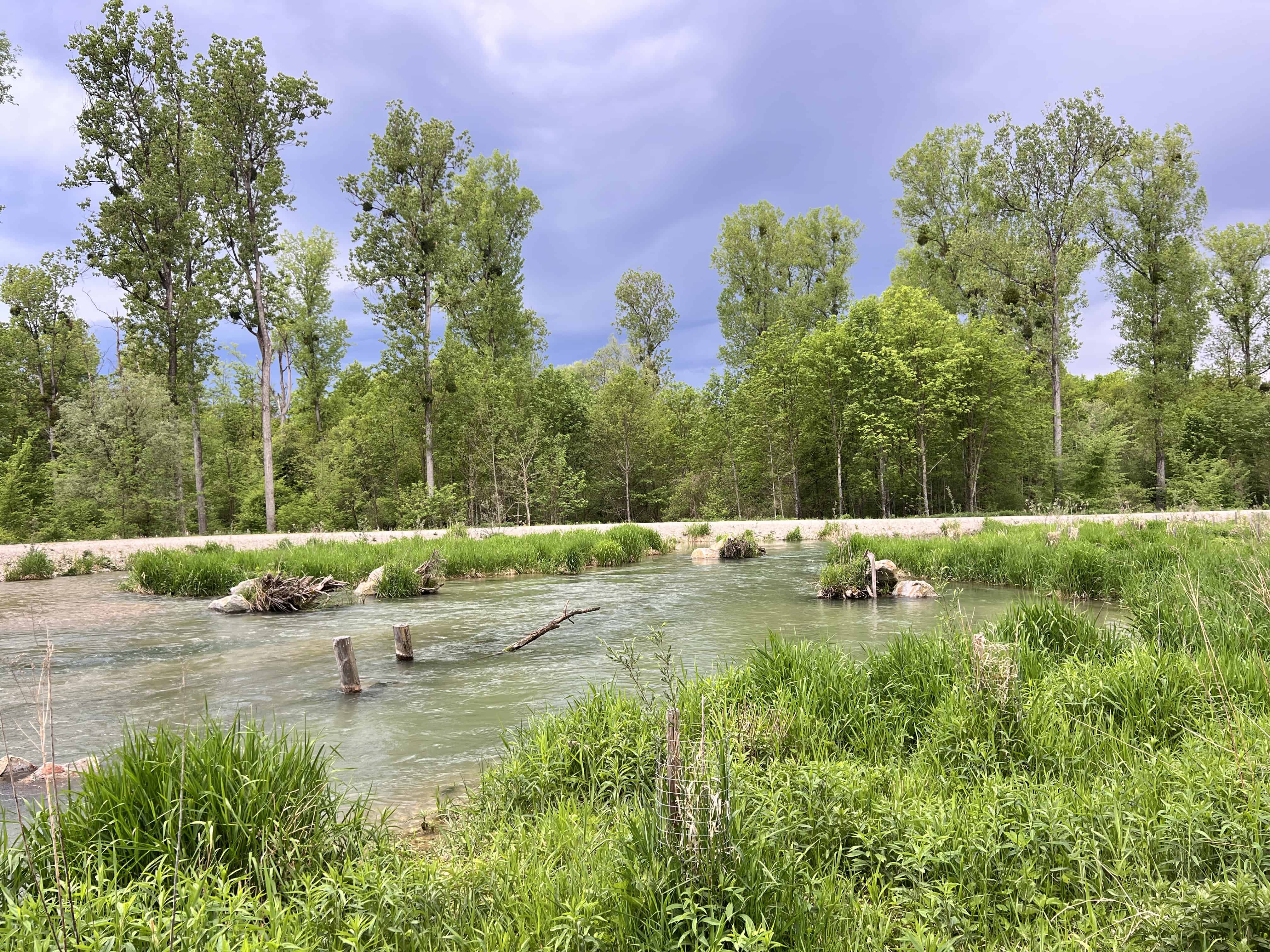
How can river restoration, wetland protection and biodiversity monitoring work together to create healthier landscapes? During the LIFE DAYS in Braunau, ALFAwetlands partner, European Wilderness Society, joined a field visit to the Lower Inn floodplains and gained valuable insights into one of the region’s important river restoration initiatives. Field visits like this help translate restoration knowledge into shared European practice connecting local experience with broader efforts to protect and restore wetlands across the continent.
A field visit to the Lower Inn riverscape
In May, ALFAwetlands took part in the LIFE DAYS in Braunau, joining the field visit and project presentation “Riverscape Lower Inn – an ecological perspective for riverscape management in the floodplains of the Lower Inn”, presented by Roland Schmalfuß from VERBUND Hydro Power GmbH.
The visit led participants to the fish migration aid at the Braunau-Simbach hydropower plant, completed in summer 2024. The site is part of the LIFE project Riverscape LowerInn, which aims to improve habitat quality and ecological connectivity in one of the largest coherent river-floodplain systems along the River Inn.
Restoring connectivity and creating new habitats
The newly created, dynamically supplied bypass channel enables fish and other aquatic organisms to move past the hydropower plant. At the same time, it creates new flowing-water habitats, including spawning areas and nursery habitats for river fish species.
Beyond restoring river continuity, the project strengthens the ecological mosaic of the Lower Inn by creating near-natural river structures such as gravel banks, shallow water zones and diverse bank areas. These habitats are especially valuable for species that depend on dynamic riverine environments, including gravel-nesting birds.
A key element of the restoration approach is the targeted reconnection of the river with its floodplain. In the lower section of the bypass channel, wide water loops, shallow banks and existing depressions have been linked in such a way that they can already be temporarily flooded during smaller Inn flood events. This brings natural water-level dynamics back into the floodplain earlier and creates typical alluvial conditions that support softwood floodplain forests, amphibians such as the agile frog, and a wider network of aquatic and terrestrial habitats.
For ALFAwetlands, this is a valuable example of how hydrological connectivity can strengthen biodiversity, ecosystem resilience and the multifunctional role of wetlands in the landscape.

Wetlands as living, connected systems
For ALFAwetlands, the field visit was particularly relevant because the Lower Inn floodplains show how rivers, wetlands, alluvial forests, meadows and wildlife habitats are closely connected. The alluvial forests seen during the visit are not isolated nature areas, but part of a wider wetland system shaped by water dynamics, groundwater exchange, vegetation succession and seasonal habitat change.
This reflects the wider philosophy of ALFAwetlands: wetlands should be understood as multifunctional landscapes. They support biodiversity, store carbon, regulate water, buffer floods and droughts, and contribute to climate resilience. As the Ramsar Global Wetland Outlook states: “Wetlands offer unparalleled benefits to biodiversity, the climate, water resources and human health.”
Linking local restoration to European wetland knowledge
The visit also connected strongly with the goals of ALFAwetlands, which aims to improve the geospatial knowledge base of wetlands, evaluate restoration pathways through co-creation, and provide indicators that maximise climate mitigation, biodiversity and other ecosystem benefits.
Scientific and policy research increasingly confirms the importance of protecting and restoring these ecosystems. According to the EU-funded ALFAwetlands project description, wetlands cover only 5–8% of the world’s land area, yet they have a significant capacity to sequester carbon under waterlogged conditions. This makes wetland restoration an essential part of Europe’s response to the linked climate, biodiversity and water crises.
The German Federal Agency for Nature Conservation also highlights that healthy floodplains and coastal wetlands are important for biodiversity conservation, climate adaptation, long-term carbon storage and the many services they provide for people.

Monitoring biodiversity in a changing riverscape
The programme concluded with insights into the ornithological monitoring carried out within the LIFE project. Bird monitoring helps assess how restored habitats are used over time and whether ecological measures are delivering benefits for target species and wider biodiversity.
For ALFAwetlands, this monitoring perspective is highly relevant. Wetland and floodplain restoration does not end when construction work is completed. Long-term observation, data collection and adaptive management are essential to understand how ecosystems respond and how restoration approaches can be improved in the future.
From river restoration to wetland resilience
The LIFE DAYS field visit in Braunau demonstrated how ecological restoration can reconnect landscapes altered by infrastructure, river regulation and land-use change. The fish migration aid at Braunau-Simbach is not only a technical solution for river continuity, but also a living example of how restoration can create space for fish, birds, plants, meadows, alluvial forests and dynamic wetland habitats.
For ALFAwetlands, the visit offered an inspiring opportunity to exchange knowledge with LIFE projects working on river and floodplain restoration. It also highlighted a key message: resilient European landscapes depend on healthy wetlands, connected rivers and long-term cooperation between science, conservation, land managers and local communities.
Supporting Biodiversity
Protecting and restoring wetlands is one of the most effective ways to support biodiversity, strengthen climate resilience and safeguard water-related ecosystem services. ALFAwetlands invites partners, practitioners, researchers and local communities to continue sharing knowledge, supporting restoration and working together for healthier wetland landscapes across Europe.