
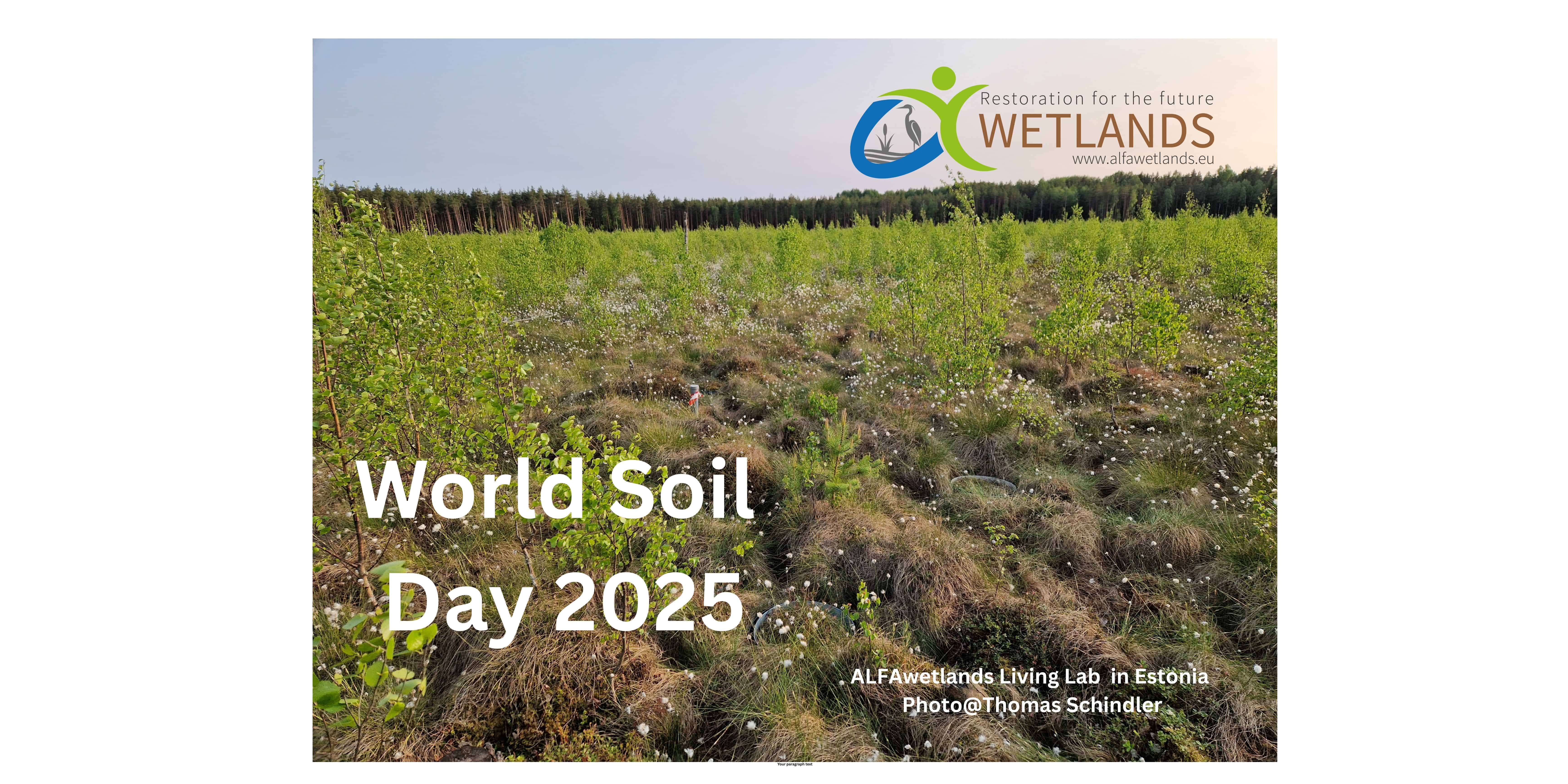
Celebrating World Soil Day 2025 with ALFAwetlands!
Every year, 5 December marks World Soil Day — a global reminder that soil underpins our food security, biodiversity, climate resilience and more.
This year’s theme is “Healthy Soils for Healthy Cities” emphasising the vital role soils play even in urban environments. Beneath pavements, roads and buildings lies a hidden resource: soils that, if managed sustainably, can absorb rainwater, store carbon, foster biodiversity, and help cool cities. At ALFAwetlands, we believe that soil health is an important issue, furthermore, wetlands and their soils are fundamental to climate mitigation, biodiversity, and the wellbeing of communities.
Why soils and wetland soils matter:
- Over 95 % of the food consumed globally originates from soils.
- Healthy soils supply most essential nutrients for plants, support biodiversity, and store carbon — making them a key ally in climate change mitigation and ecosystem health.
- When soils are degraded — by urban sealing, poor land use, pollution, or mismanagement — these services decline, compromising food security, water regulation, biodiversity and climate resilience.
Wetland soils are especially important: they often accumulate carbon under water-logged conditions, support unique biodiversity, and provide ecosystem services (flood buffering, water purification, climate regulation).
ALFAwetlands, soil & wetlands
The ALFAwetlands project is dedicated to advancing geospatial knowledge on wetlands, developing inclusive restoration approaches, and producing data and indicators to support sustainable wetland management in Europe.
Key aspects relevant to soils and World Soil Day:
- We study organic soils in wetland environments across a range of wetland types (peatlands, riparian wetlands, forested wetlands, coastal wetlands, restored former peat extraction zones).
- Using unified, rigorous methods, we monitor greenhouse-gas fluxes, carbon stocks (above and below ground), microbial and chemical soil parameters, to assess the carbon balance and climate mitigation potential of wetlands.
- By doing so, we help to reduce current uncertainties around how much carbon wetlands can store, or release – an essential step for integrating wetlands in climate strategies, land-use planning, and conservation measures under EU climate and biodiversity goals.
- Our work emphasises co-creation, community-driven restoration, and spatially explicit geoinformatics, meaning that wetland restoration isn’t just ecological or technical, but also social and landscape-wide.
What World Soil Day 2025 means for wetlands & the future
This year’s focus on “Healthy Soils for Healthy Cities” underlines that soil matters not just in agriculture or rural areas, but also beneath urban and peri-urban zones. When we think of soils, we should expand that thinking to include wetland soils, especially in floodplains and natural/renaturalised wetlands for several reasons:
- Wetland soils act as natural buffers: absorbing excess water during heavy rains to reduce floods; filtering pollutants; regulating water flows.
- They are carbon-rich: preserving and restoring wetland soils helps lock carbon away, supporting climate goals. ALFAwetlands’ soil carbon monitoring plays directly into this potential.
- They support biodiversity, including specialized microorganisms, plants, and habitats, many species depend on wetland soils rather than “typical” agricultural soils.
- They connect rural, peri-urban and even urban systems, reminding us that soil health and wetland restoration are part of a bigger patchwork: from fields to cities to natural floodplains – all contributing to ecosystem resilience, climate mitigation, and human wellbeing.
By raising awareness of soil’s role, not only under farmland but also under wetlands and urban/natural landscapes, we can push for more holistic land-use strategies, restoration policies, and sustainable city planning.
We encourage you to
- Recognise that soil is not just farmland! Wetlands, floodplains, peatlands, and natural soils underlie much of our ecosystem functions.
- Support wetland restoration projects, especially those combining scientific monitoring, community engagement, and landscape-wide planning, like ALFAwetlands does.
- Share and promote awareness: on social media, among local communities, policy-makers: about the importance of soil and wetlands
- Advocate in your community or city for sustainable soil and wetland management, including permeable surfaces, green infrastructure, wetland protection / restoration, and climate-safe land use.
We also invite you to explore ALFAwetlands’ research, data and publications, Living Labs activities on wetland and soil processes to deepen your understanding of how healthy soils support resilient landscapes and climate solutions!
Support our efforts
This World Soil Day offers a chance to rethink: when we talk about soil, we shouldn’t limit our vision to crops and fields. Soil under wetlands, forests, riparian zones often neglected, is a reservoir of climate, biodiversity and water services. The ALFAwetlands project invites you to appreciate these hidden soils, to support wetland restoration, and to consider soil health as a pillar of sustainable cities, resilient landscapes, and shared climate action.
Feel free to explore our research and join the conversation. Together, we can celebrate soil and wetlands for a healthier, greener future.